
QULIPTA improved performance of daily activities across 12 weeks2
Secondary Endpoint: Change from baseline in mean monthly AIM-D PDA domain score across 12 weeks.2
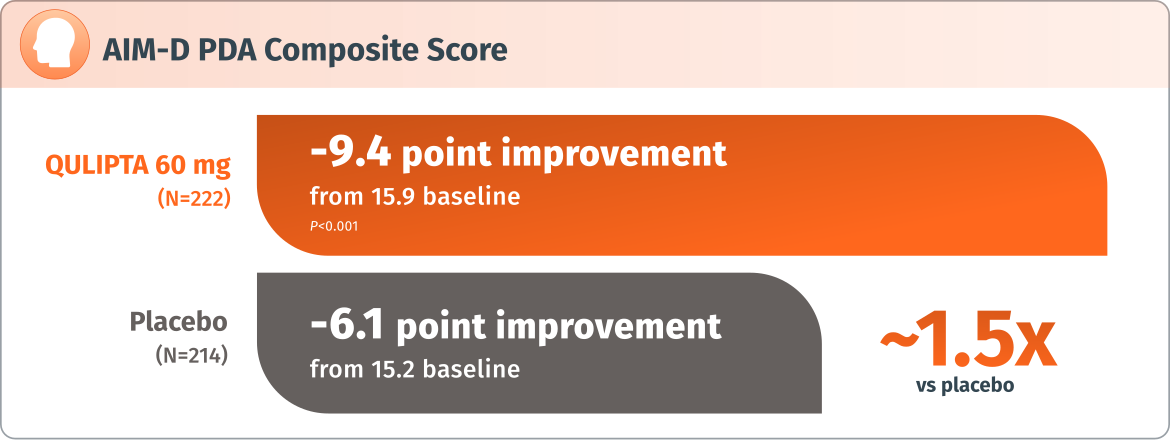
- QULIPTA 30 mg: -8.6 point improvement from baseline 16.9 (N=223; P<0.001)
- QULIPTA 10 mg: -7.3 point improvement from baseline 15.5 (N=214). The 10 mg results were not statistically significant
AIM-D is an 11-item questionnaire designed to measure activity impairment attributed to migraine in the past 24 hours and consists of 2 domains: PDA (7 items) and PI (4 items). Participants responded to items using a 6-point scale ranging from “Not difficult at all” to “I could not do it at all.” Scores are transformed to a 0-100 scale. Higher scores indicate greater impact of migraine, and reductions from baseline indicate improvement.2,3
The AIM-D PDA domain consists of 7 items to evaluate difficulty with performance of daily activities due to migraine in the past 24 hours2,3
INDIVIDUAL ITEM ANALYSIS
QULIPTA improved performance of daily activities,
which included difficulty concentrating & thinking clearly4
INDIVIDUAL ITEM ANALYSIS
Post hoc analysis: Individual item analysis of composite AIM-D PDA endpoint (change from baseline) across 12 weeks in which patients were asked how difficult it was for them to do the following during the past 24 hours.4
Difficulty concentrating and difficulty thinking clearly are 2 items within the 7 item AIM-D PDA domain. AIM-D PDA was not designed to assess items individually.
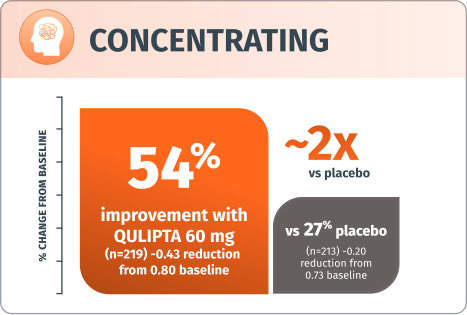
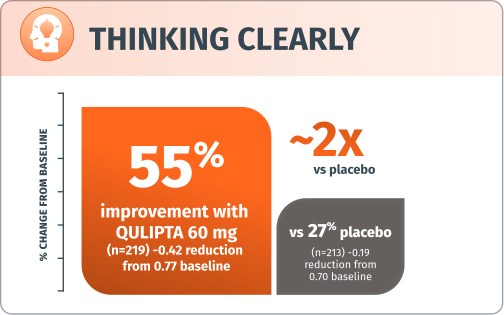
Higher scores indicate greater impact of migraine; reductions from baseline indicate improvement.2
INDIVIDUAL ITEM ANALYSIS
Post hoc analysis: Individual item analysis of composite AIM-D PDA domain endpoint (change from baseline) across 12 weeks in which patients were asked how difficult it was for them to do the following during the past 24 hours.4
These are 5 items within the 7-item AIM-D PDA domain. AIM-D PDA was not designed to assess items individually.
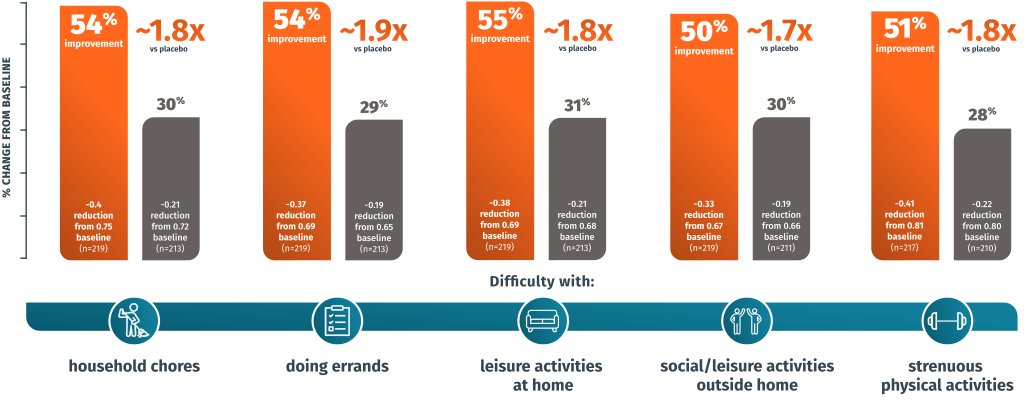

LIMITATIONS: Individual item analyses were not prespecified endpoints and were not adjusted for multiplicity. Therefore, treatment differences cannot be regarded as statistically significant. Individual item changes should be interpreted with caution.
In a head-to-head, 24-week randomized controlled superiority study powered to assess the tolerability and efficacy of QULIPTA vs topiramate
QULIPTA demonstrated superiority vs topiramate across primary and secondary endpoints1
QULIPTA vs topiramate superiority study
TEMPLE study design: QULIPTA vs topiramate head-to-head evaluating tolerability, safety, and efficacy in preventive migraine treatment
TEMPLE (N=545) was a global (outside of the US), multicenter, randomized, double-blind, double-dummy (matching placebos), parallel-group, active-controlled, 24-week Phase 3b trial comparing the tolerability, safety, and efficacy of QULIPTA 60 mg once daily and topiramate at the highest tolerated dose (50, 75, or 100 mg per day) in adults with episodic or chronic migraine who were eligible for conventional preventive migraine treatment. The double-blind treatment period included a 6-week up-titration phase and an 18-week maintenance phase. Participants in the topiramate group started at 25 mg/day and had to reach at least 50 mg/day by the end of the 6-week up-titration period. Participants then continued in the maintenance phase at their highest tolerated dose (50, 75, or 100 mg/day). Dose reduction was not allowed for either group.1,5
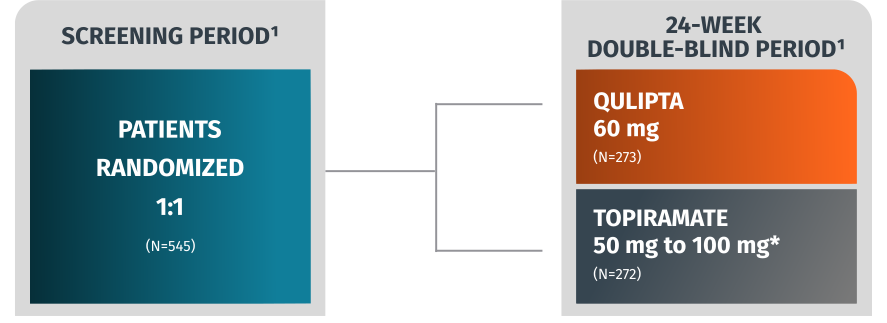
Primary Endpoint1:
- Treatment discontinuation due to AEs during the 24-week DB treatment period
The primary endpoint was based on the safety population consisting of all patients who received at least 1 dose of study treatment during the DB treatment period.
Secondary Endpoints1:
- Achievement of 50%-100% improvement (reduction) in mean MMD during Months 4 to 6 of the DB treatment period
- Change from baseline in mean MMD during Months 4 to 6 of the DB treatment period
- Change from baseline in HIT-6 total score at Week 24
- Change from baseline in MSQ Version 2.1 RFR domain score at Week 24
- Achievement of a rating of "much better" or "very much better" at Week 24 assessed by the PGIC
- Change from baseline in PROMIS Cognitive Function–Abilities Subset score at Week 6
The secondary endpoints were based on the mITT population (n=527), which included all randomized patients who received at least 1 dose of study treatment, had an evaluable baseline period of eDiary data, and had at least 1 evaluable post-baseline 4-week period of eDiary data within 24 weeks after the first dose of study medication (Month 1 to Month 6), regardless of whether on study treatment or off study treatment.
Key Inclusion Criteria5:
- Adult subjects with a history of ≥4 MMD who were eligible for conventional migraine preventive treatment
- No prior exposure to topiramate or QULIPTA
*The recommended total daily dose for migraine prevention for topiramate is 100 mg in two divided doses.6
In a 24-week randomized controlled head-to-head study,
Significantly more patients discontinued topiramate due to AEs than QULIPTA1
Primary endpoint: Treatment discontinuation due to AEs during the 24-week DB treatment period.1†
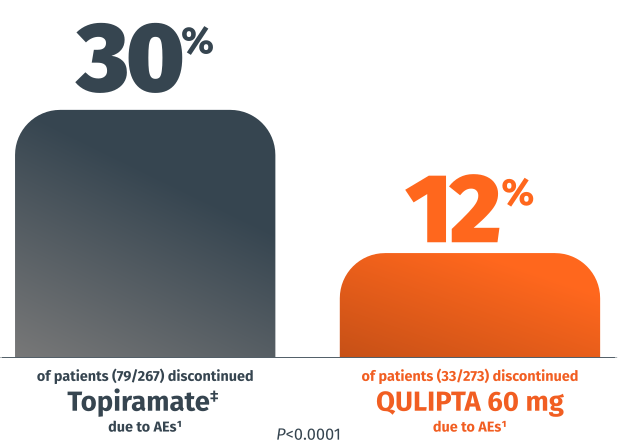
~2.5x more patients discontinued topiramate due to AEs vs QULIPTA1
†Based on the safety population, which consisted of all subjects who received at least 1 dose of study treatment during the double-blind treatment period.1
‡Topiramate dosing: 25 mg starting daily dose was titrated up to the highest tolerated daily dose of 50 mg, 75 mg, or 100 mg.5
In a 24-week randomized controlled head-to-head study,
QULIPTA was superior to topiramate at 50%-100% MMD reduction1
Secondary endpoint: Percentage of patients who achieved 50%-100% improvement (reduction) in mean MMD during Months 4 to 6 of the DB treatment period.1§
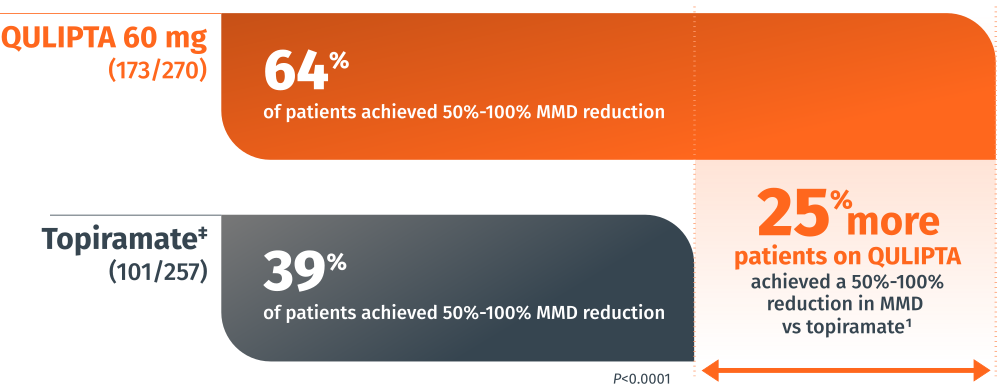
§Based on the mITT population (N=527) which included all randomized patients who received at least 1 dose of study treatment, had an evaluable baseline period of eDiary data, and had at least 1 evaluable post-baseline 4-week period of eDiary data within 24 weeks after the first dose of study medication (Month 1 to Month 6), regardless of whether on study treatment or off study treatment.1
‡Topiramate dosing: 25 mg starting daily dose was titrated up to the highest tolerated daily dose of 50 mg, 75 mg, or 100 mg.5
AE=adverse events; AIM-D PDA=Activity Impairment in Migraine-Diary Performance of Daily Activities; DB=double-blind; HIT-6=Headache Impact Test-6; mITT=modified intent-to-treat; MMD=Monthly Migraine Days; MSQ Version 2.1 RFR=Migraine-Specific Quality of Life Questionnaire, Version 2.1, Role Function-Restrictive; PGIC=Patient Global Impression of Change; PI=physical impairment.